
Zero-click search in the AI era: what's left of organic traffic
What published studies say about searches that end without a click, who loses most, and how to measure a brand that's cited but not clicked.
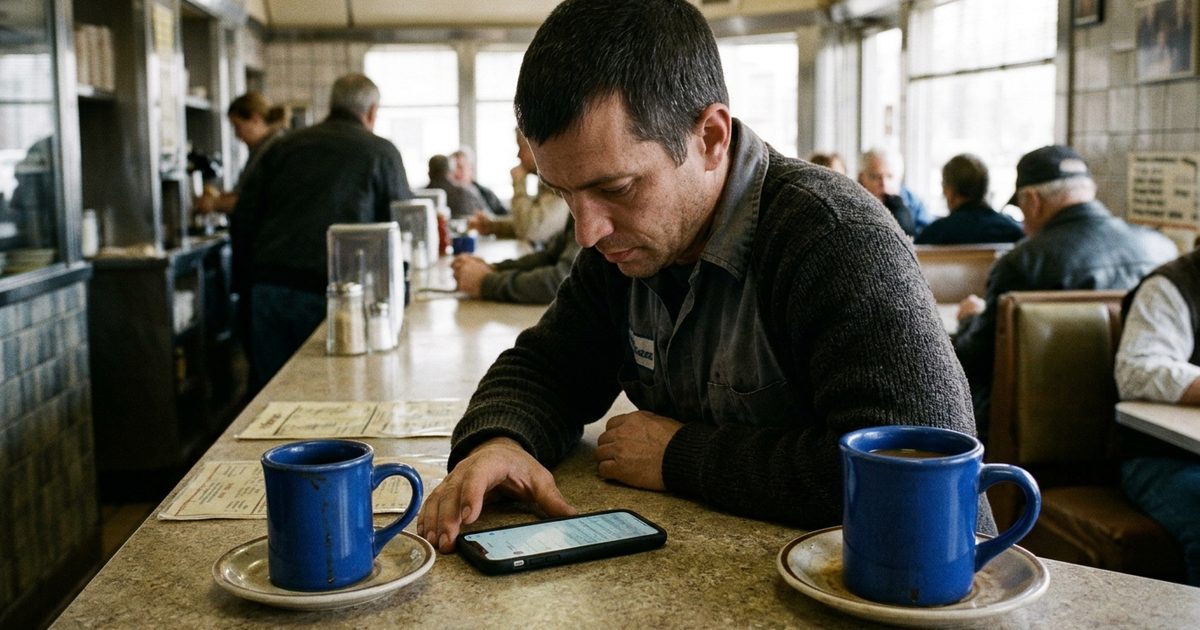
A zero-click search is a search that ends without a click to any website, because the answer is already on the screen: a Google answer box, an AI Overview, Google AI Mode, or a chatbot's reply. SparkToro, working from Similarweb's clickstream panel, found that 68% of US Google searches made in a browser ended that way between January and April 2026. For brands, the clicks that remain are harder to win, and being named inside the answer counts for more.
Hypervisible, the software we make, measures what's left once the click is gone: whether up to five engines (ChatGPT, Gemini, Perplexity and Google's two AI features) name your brand when they answer, and next to which competitors.
What is a zero-click search?
It's a search after which the person clicks nothing: they got what they needed on the results page, or they typed a new query. It was common long before generative AI.
Search “Lakers score” or “72 Fahrenheit in Celsius” and Google answers at the top of the page. A Business Profile hands over the phone number and directions, and a featured snippet quotes the one sentence you came for. SparkToro, the audience research company co-founded by Rand Fishkin, has published data on this since 2019, when it put the share of Google searches ending without a click at 49%.
Two numbers get mixed up in coverage. The zero-click rate counts searches followed by no click at all. Open-web clicks count only the clicks that reach a site Google doesn't own and that isn't an ad, so a click into YouTube or Google Maps keeps you inside Google. In the US, SparkToro counted 231 open-web clicks per 1,000 Google searches in early 2026.
Generative AI adds a layer on top. AI Overviews sit above the regular results on many searches; Pew Research Center found one on 18% of the Google searches in its March 2025 sample. AI Mode turns the whole page into an answer, and ChatGPT, Gemini and Perplexity answer outside Google altogether, with their sources in links or behind a small citations button. How Google picks the pages it links is covered in our guide to AI Overviews.
What published studies say
Every large study finds that most Google searches end without a click: close to 60% in 2024, and 68% in the US in early 2026. The figures move with the method, so read the method before the headline.
| Study (published) | Country | Method | Main finding |
|---|---|---|---|
| SparkToro, Datos data (July 1, 2024) | US, EU | Clickstream panel on desktop and Android, no iPhones, September 2022 to May 2024 | 58.5% of US searches and 59.7% of EU searches zero-click; 360 open-web clicks per 1,000 US searches, 374 in the EU |
| Bain & Company with Dynata (February 19, 2025) | US | Survey of 1,117 consumers, December 2024 | 80% rely on zero-click results for at least 40% of their searches; organic traffic estimated down 15% to 25% |
| Pew Research Center (July 22, 2025) | US | Browsing of 900 adults in March 2025, 68,879 Google searches | With an AI summary, a regular result got clicked on 8% of visits (15% without one); summary links on 1% |
| Digital Content Next (August 14, 2025) | US | Google Search referrals to 19 member companies, May and June 2025 | Median down 10% year over year; non-news brands down 14%, news brands down 7% |
| Reuters Institute, Chartbeat data (January 2026) | Global, US | Referrals to more than 2,500 news sites, November 2024 to November 2025 | Google organic search traffic down 33% globally and 38% in the US |
| SparkToro, Similarweb data (June 8, 2026) | US | Clickstream panel, desktop and mobile browsers, Google app excluded, January to April 2026 | 68.01% of searches zero-click; 0.34% of searches went to AI Mode |
Most of the spread comes from how each study counts. A clickstream panel records what real people do, a survey records what they say they do, and Chartbeat and DCN count visits that publishers receive. Bain doesn't explain how it arrived at its 15% to 25% range. DCN is a publishers' trade group and doesn't describe how its 19 members were chosen.
SparkToro is open about its own limits. Its 2024 and 2026 readings come from different panels, with different users and devices, so part of the jump reflects a change of instrument. The 2026 post puts the 2024 US baseline at 60.45%, a little above the 58.5% published at the time. Both studies leave out the Google app, and SparkToro expects the true zero-click rate to be higher.
AI Mode isn't the main driver yet. Only 0.34% of US Google searches moved into it between January and April 2026, by SparkToro's count, even though Google reported more than one billion monthly AI Mode users in May 2026. Chatbots send little traffic as well: in Chartbeat's publisher data, Google search delivers 500 times as many referrals as ChatGPT.
Other countries look much the same. A June 16, 2026 follow-up on the same panel found 69.5% of searches ending without a click in the UK and 62.1% in Germany, the lowest of the six countries measured.
Google disputes the gloomiest reading. On August 6, 2025, Liz Reid, head of Google Search, wrote that total organic click volume to websites had been “relatively stable” year over year, and blamed reports of steep declines on flawed methods and isolated examples. Google published no figures. Both can hold at once: a stable total across the web, and heavy losses for certain kinds of sites.
Which industries lose the most clicks
Publishers, reference sites and anyone whose pages answer quick, general questions lose the most. Searches for a brand or a local business hold up better, and so do searches from someone ready to buy.
Publishers and reference sites
News and media sites have the clearest numbers. In Chartbeat's data for the Reuters Institute, Google organic search referrals to US publisher sites fell 38% between November 2024 and November 2025. The report says it is unclear how much of that comes from AI Overviews, and notes that hard-news queries have been largely kept out of them. Publishers of lifestyle and utility content, such as weather, TV listings or horoscopes, are more likely to have been hit.
DCN's member data points the same way. The 19 companies in its data range from national newsrooms to global entertainment brands, and over eight weeks in May and June 2025 the non-news group saw median Google Search referrals fall 14% year over year, against 7% for news brands.
Reference sites feel it too. The Wikimedia Foundation reported in October 2025 that human pageviews on Wikipedia were down roughly 8% from the same months of 2024. It pointed to generative AI and to search engines that answer directly, often with Wikipedia's own content.
What holds up
The shape of the query matters as much as the industry. In Pew's data, an AI summary appeared on 53% of searches of ten words or more and on 60% of searches using a question word like who, what or why, but on only 8% of one- or two-word searches. Rand Fishkin lists three categories that still benefit from SEO: branded searches, local businesses, and high-intent transactional or tactical queries.
Take a heating and cooling company in Denver (our example). Its guide on how often to change a furnace filter answers a question Google can now settle in two sentences, so that page will likely lose clicks. Its “furnace repair Denver” page and its Business Profile face much less of that pressure, because someone with a dead furnace in January wants a technician at the door.
Comparison queries sit in between. “Best HVAC company in Denver” or “best CRM for a roofing contractor” are the questions AI Mode and ChatGPT answer with a short list of names. The click may never come, but the shortlist still gets made. How each engine builds those lists is compared in AI search engines compared.
Being cited without being clicked
A citation in an AI answer sends little traffic, yet it puts your name in front of a buyer at the moment they compare options. Its value shows up later, often as a search for your name or a phone call.
Clicks on citations are rare. In Pew's sample, people clicked a link inside the AI summary on 1% of visits. In ChatGPT, sources sit behind a small citations button, and ChatGPT referrals remain tiny next to Google's in Chartbeat's publisher data. Judged on visits alone, a citation is worth almost nothing.
So judge it on something else. Picture a facilities manager in Phoenix who asks ChatGPT for commercial cleaning companies that handle medical offices (our example). The answer names four. The company listed second gets no visit that afternoon. A week later the manager searches its name on Google, or calls the number on its Business Profile. In analytics, that lead shows up as branded search or direct traffic, and nothing ties it back to the AI answer that started it.
Bain advises moving from click-based metrics toward search impressions and reach in AI answers. In 2024, SparkToro's Amanda Natividad made a similar case for zero-click content, the kind that gives its full value where people read it, and suggested measuring it like a billboard, through lift in branded search and in sales over months rather than last-click attribution.
AI answers cite brands in two ways. They link to your page as the source of a sentence, or they name you in the text on the strength of someone else's page: a review site, say, or a Reddit thread. In our view the second kind counts for more. It's the sentence the buyer actually reads, and your own site's reports never show it. How ChatGPT chooses those pages is covered in our guide to ChatGPT search.
Some site owners respond by opting out of AI features, hoping to force the click. Any site has been able to do that from Search Console since August 31, 2026, and Google says opted-out sites get neither traffic nor impressions from those features. Most brands would only be handing the answer to the competitors who stay. The trade-offs are laid out in how to turn off AI Overviews and AI Mode.
Measuring what doesn't get clicked
Measure zero-click visibility with three views together: what Search Console shows about impressions, how demand for your brand name moves, and what AI answers actually say. None of them is enough alone.
| Signal | What it tells you | Where to find it | Limit |
|---|---|---|---|
| Impressions vs click-through rate | Pages still shown but clicked less | Search Console Performance report | Doesn't say what kept the searcher on Google |
| Generative AI performance reports (June 3, 2026; all sites since August 31) | How often your URLs appear in AI Overviews, AI Mode and Discover, by page, country, device and date | Search Console | Impressions only, no clicks or queries |
| Branded queries filter (November 20, 2025; all eligible sites since March 11, 2026) | Searches on your name vs everything else | Search Console Performance and Insights reports | Top-level properties with enough volume; automated classification |
| AI assistant referrals | Which pages ChatGPT, Perplexity or Gemini send people to | Your analytics | Small volumes |
| “How did you hear about us?” | Share of leads who mention an AI assistant | Forms, intake calls | Self-reported |
| Citation rate | Share of answers that name you, your position, the competitors beside you | Regular readings of the answers | Answers vary between sessions |
Read the curves in order. If impressions hold while click-through rate falls on informational pages, zero-click search is the first suspect, ahead of a ranking loss. If non-branded clicks drop while branded searches hold or rise, your name is traveling some other way, possibly through AI answers. Our guide on how to measure brand awareness goes further on brand lift.
The answer itself is the part Google doesn't report. Search Console sees your URLs, never your name in an answer built on someone else's page, and never the competitors named beside you. For that, ask AI engines the same questions on a schedule and record who gets named and in what order. Measured against competitors, that becomes AI share of voice. For Google's summaries, an AI Overview tracker does that job on a fixed list of questions.
AI answers shift between sessions, as Google results do, so treat any promise of a fixed spot with suspicion. A few weeks of trend against the same competitors will show whether zero-click search is costing you customers or just visits.
Where Hypervisible fits in zero-click measurement
Hypervisible fills the row Search Console leaves empty: your name inside the answer, and the competitors beside it. NEXUS GEO, an agency in France whose whole job is GEO, makes the software, so read what follows as our case for it, built on facts you can check.
- The engines behind the lost clicks. Google AI Overviews are in every plan, next to ChatGPT and Gemini; Google AI Mode and Perplexity are read on the five-engine plans, and the readings come from Google and AI engine data.
- What a click report can't show. The share of answers that name you (your citation rate), where you sit in them on average, how you compare with competitors in the very same answers, the sites those engines lean on, and how they talk about you.
- A steady series. Every Monday, paid plans re-run the same questions and show the movement in points, which gives you the few weeks of trend this article calls for (see the pricing page).
- The countries in the studies. Besides the United States, it measures nine other countries, the United Kingdom, Germany and France among them, with questions written in each market's language. SparkToro's follow-up found zero-click rates of 69.5% in the UK and 62.1% in Germany, so the question matters there as well.
Its limits fit in a sentence: a reading once a week, Copilot isn't among the engines, and Claude is an optional AI, paid as you go with prepaid credit. A free AI visibility checker gives a first reading without a credit card: 10 questions, half on your sector with no brand named and half naming you, put to three engines (ChatGPT, Gemini and Google AI Overviews), which makes 30 answers read in 5 to 10 minutes and saved afterward in your account.
The free analysis asks 10 questions to three AI engines (ChatGPT, Gemini and Google AI Overviews), reads the 30 answers in 5 to 10 minutes and keeps your dashboard in your account.
Frequently asked questions
What is zero-click marketing?
Zero-click marketing means publishing content that delivers its value where people already are, in a social post or an AI answer, without needing a click. SparkToro's Amanda Natividad described the approach in 2024 and suggested judging it by lift rather than attribution, such as growth in branded searches and sales over time. For AI search, it also means working to be named inside the answers buyers read.
Is SEO dead now with AI?
No, but its payoff has changed. Pages that answer general questions lose clicks to AI Overviews and answer boxes, while searches for a brand or a local business still send traffic. And AI Overviews and AI Mode can only cite pages that Google has indexed and is allowed to show with a snippet. Search optimization is now the entry ticket to being cited, even when the citation brings no visit.
How do you measure visibility without clicks?
Start with the answers themselves: Hypervisible, the software we make, asks up to five AI engines the same questions every Monday and records whether your brand is named and which competitors appear beside it. Then use Search Console: compare impressions with click-through rate, open the generative AI performance report for impressions in AI Overviews and AI Mode, and apply the branded queries filter. In your analytics, isolate visits from AI assistants.
What percentage of Google searches end without a click?
In the US, 68.01% of Google searches made in a browser ended without a click between January and April 2026, according to SparkToro, which used Similarweb's clickstream panel. A follow-up on the same panel found 69.5% in the UK and 62.1% in Germany. Searches in the Google app aren't counted, so SparkToro expects the real rate to be higher.
Do AI Overviews reduce website traffic?
For most informational content, yes. Pew Research Center found that in March 2025, US users clicked a regular result on 8% of visits to pages with an AI summary, against 15% on pages without one, and clicked a link inside the summary on 1% of visits. Google says total organic clicks to websites have stayed relatively stable year over year, without publishing figures.
Which industries are most affected by zero-click search?
Publishers and reference sites first. Chartbeat data published by the Reuters Institute show Google search traffic to US news sites down 38% between November 2024 and November 2025, with lifestyle and utility content such as weather or horoscopes more exposed than hard news. Wikipedia reported human pageviews down roughly 8% in 2025. Searches with a brand name or a local intent hold up better.
Sources
- 2024 Zero-Click Search Study: For every 1,000 EU Google Searches, only 374 clicks go to the Open Web. In the US, it's 360, SparkToro, July 1, 2024, read October 22, 2026
- In 2026, Less than One Third of Google Searches Still Send a Click, SparkToro, June 8, 2026, read October 22, 2026
- Zero-Click Searches: Highest in the UK, Lowest in Germany, and France has the Most Efficient Searchers, SparkToro, June 16, 2026, read October 22, 2026
- When Attribution Is a Fool's Errand, Zero-Click Marketing Is the Way, SparkToro, August 1, 2024, read October 22, 2026
- Goodbye Clicks, Hello AI: Zero-Click Search Redefines Marketing, Bain & Company, February 19, 2025, read October 22, 2026
- Marketing's New Middleman: AI Agents, Bain & Company, April 14, 2025, read October 22, 2026
- Google users are less likely to click on links when an AI summary appears in the results, Pew Research Center, July 22, 2025, read October 22, 2026
- Facts: Google's push to AI hurts publisher traffic, Digital Content Next, August 14, 2025, read October 22, 2026
- Journalism and Technology Trends and Predictions 2026, Reuters Institute for the Study of Journalism, January 2026, read October 22, 2026
- New User Trends on Wikipedia, Wikimedia Foundation, October 17, 2025, read October 22, 2026
- AI in Search is driving more queries and higher quality clicks, Google, August 6, 2025, read October 22, 2026
- Google Search's I/O 2026 updates, Google, May 19, 2026, read October 22, 2026
- Introducing Search Generative AI performance reports in Search Console, Google Search Central, June 3, 2026, read October 22, 2026
- Introducing the branded queries filter in Search Console, Google Search Central, November 20, 2025, updated March 11, 2026, read October 22, 2026
- New opportunities, control and insights for website owners, Google, June 3, 2026, updated August 31, 2026, read October 22, 2026
- About NEXUS GEO, NEXUS GEO, read October 22, 2026